Can you report on data from SAP and SuccessFactors at the same time?

Labs_Coloured_blocks


SAP’s approximately 13,500 HCM customers are all encouraged to begin their journey from SAP HCM On-Premise to SAP SuccessFactors and the cloud. I’ve talked quite a bit in our Let’s Talk HCM blog series about the options that customers have while they make their journey, including these blogs here, here and here. If you are not in the know on why customers are making the journey from on-premise SAP to SuccessFactors in the cloud, or what options they have to get there, please feel free to watch an on-demand webinar I gave on this subject in May 2019.
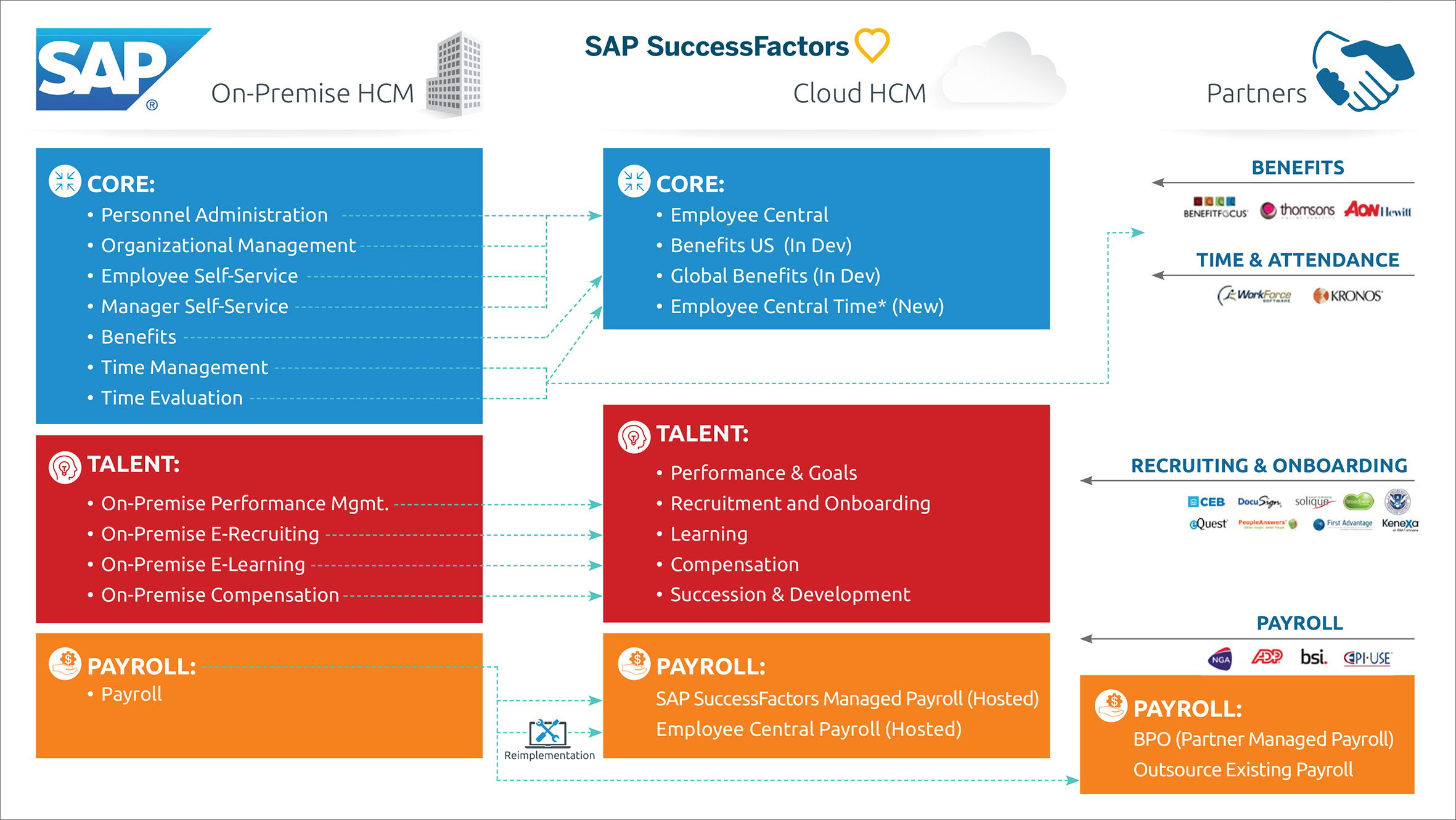
SAP to SuccessFactors

Regardless of where you are in your journey, you have a requirement for reporting. Integration is one of our most important strategic focuses on the HCM side for EPI-USE Labs, and we will continue development on integration to keep pace with our clients and the market to ensure that we are with them on this journey. The world-class, SAP-certified Query Manager reporting solution has been helping thousands of clients around the world just like you to solve their reporting challenges for all things SAP HCM, Payroll, time etc.

Play video
Today, we are gonna talk about Query Manager 4 and its capabilities to do integrated reporting with SAP SuccessFactors Employee Central. So what I'm going to do is I'm gonna go ahead and create a new report. I'm gonna choose the folder destination within which I want to add this folder. I'm going to go ahead and add to our SuccessFactors folder here. We'll go ahead and create a new query. Name it SuccessFactors Report. Now I'm gonna go down just to a pre-made template that already has some basic information in based on the SuccessFactors employee and go ahead and hit my create button. Now it's going to bring us to the main screen of Query Manager 4 in which we're going to select all of the data that we want to report on. Now we can see on the left side of our screen here, we have different categories to choose from. The default category is compensation information. This is all the information that's stored within Employee Central relative to their compensation. So you have your compa ratio, range penetration, the amount, pay component, and then other groupings of information. So you have your payment information such as all of your bank account information. You have any alternative cost distribution in case you have alternative cost along with the call center associated to that. Now we can change the categories to different things. So we can go to our employee profile. We can go to employment information, which is just information about the employment details. So if we wanna bring in their original start date, we can add that in by a simple double click. It automatically adds it in to the report for us. Next thing, we can go down to any organizational position information we want. So under organization information, we can bring in certain things such as our business unit, company, cost center. We wanna add that in. And if we ever wanted to add in a time zone or location, we can add that in as well. Next category, let's just go down to personal information. We already have some information here such as first name, last name, but let's add some other things such as their date of birth. And then let's go down to our global information, and let's see what we have here. Here, we also globalize to bring in any countries that you have configured on your system. In this case, we're gonna be working with United States. I'm gonna expand this folder, and then we can see all of the United States specific global information that you may have within your SuccessFactors, Employee Central instance. So right here, we can add ethnic group in the report, and it automatically adds it into the report for us. Now this is all information that is coming directly from SuccessFactors. In a case where we actually wanna integrate this in with our SAP, whether it's on premise payroll and time or whether you have an ECP, Employee Central Payroll instance, we can add either one of those fields in, as well. So I'm gonna expand our SuccessFactors employee here and go to what we call a related business object, and we'll add in just the SAP employee. Now because of the way integrations from SuccessFactors and SAP or ECP is, you can have different ways to integrate the data. In this case, we're tying it based off the person ID external, employee to the personnel number and SAP. And I'm gonna go ahead and hit continue here, and it automatically adds in our SAP or ECP information directly for us. Now we can see that we have a different little road map here, some success factors information, some SAP or ECP information, and we have others. So if we wanted to make this a report, let's say we're comparing first name and last name to be sure everything's replicating across, we can add that in as well. So I can actually add in last name from SAP and then first name as well. If we want to, we can quickly give these a rename and say last name SAP. So last name SAP, and then this is actually first name SAP. Next thing we're going to do is actually just switch over and go directly to payroll because no payroll information is stored in SuccessFactors. We're gonna store it still on your SAP on premise instance or Employee Central Payroll. And it's easy as getting the clusters data to the SAP payroll data is going to this payroll results folder, scrolling down, adding in our wage type and payroll amount. And just like that, you have a SuccessFactors integrated report with SAP payroll information. I can go ahead and hit finish on my report, and we have a fully integrated report. So once we finish that report, I actually have a report that was prerun. We already have information. This is one that has payroll and brings back SuccessFactors manager information back across. So we can just quickly take a look. Another powerful thing Query Manager 4 does is we actually store runs for you. So you can go back and look at prior runs that you have. Here's one that I ran for the entire second quarter. We can see that we only have April's information in here, but we have compa ratio and range penetration from SuccessFactors along with your gross pay, deduction, taxes, net pay from SAP or ECP. And then we're bringing back also the supervisor information, which is housed in your SuccessFactors Employee Central instance. Along with Query Manager for being able to run it here, you can also integrate this directly within your employee central instance. So with that being said, I'm gonna switch over to a Internet browser. Here, we actually have one of our employees, and I'm just actually gonna go to our home page within SuccessFactors. And I'm simply gonna scroll down to my specialty area where we have Query Manager launchpad right here from a tile. I'm gonna choose this tile, and it's gonna actually pop up Query Manager directly in the web for us. Now we can do things such as we can do things to get to all of our reports that we currently have, or you can set up favorites and directly access reports from here. So I'm gonna access our SuccessFactors employee review doc, and what this does is it actually compares SAP data to your SuccessFactors data to be sure that everything matches across both systems. I'm going to go ahead and choose this last run that I have here. And what we actually have here is a nice PDF view with our Document Builder solution powered by Query Manager 4 that just shows basic information from both Employee Central and SAP all in one report and then highlights any data discrepancies that may be there. Another thing we can do is any data discrepancy we want, we can embed that directly within our Employee Central homepage. So here is a SAP for SuccessFactors just comparing the address data. I'm gonna go ahead and choose this tile, and it'll pop up and show me the grid results. And just like that, we have a pop up here, just a grid view, actually showing each employee that we ran this for. This is our latest run and also highlights what's different between the SAP information and our SuccessFactors information.


QM Quote

Did you know that Query Manager can also report on SuccessFactors data? 
It doesn’t matter where you are in your cloud journey, you can leverage the Query Manager SuccessFactors Integration Add-On to access your SuccessFactors data. Some of the popular applications of this for our current clients include:

  • Comparing data between SAP and SuccessFactors to identify differences
    Whether it’s for validation that data loaded correctly or for an ongoing audit, the Query Manager SuccessFactors Integration Add-On provides users with the ability to compare and validate data. See a sample report that shows fields from SAP and SuccessFactors side-by-side in a report.
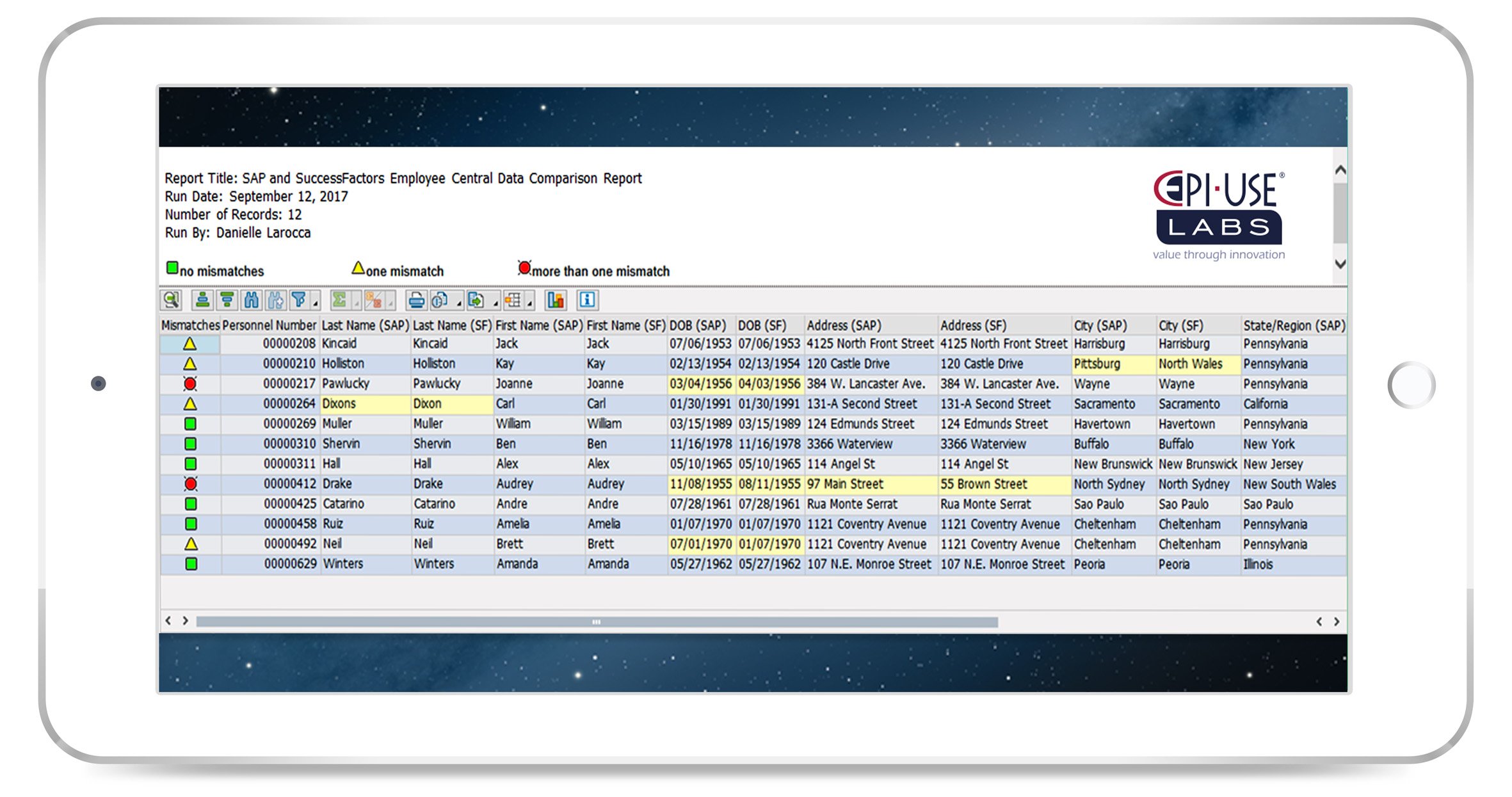
Comparing data between SAP and SuccessFactors to identify differences
  • Employee Central Payroll Reporting
    Whether your data is in SAP On-Premise Payroll, SAP SuccessFactors Managed Payroll or in SuccessFactors Employee Central Payroll, there is no solution that does a better job of reporting on payroll than Query Manager. If you are curious about which types of payroll reports are available with the solution, see here. To see a sample report with payroll data viewed through our web app for browsers and mobile devices, see below.
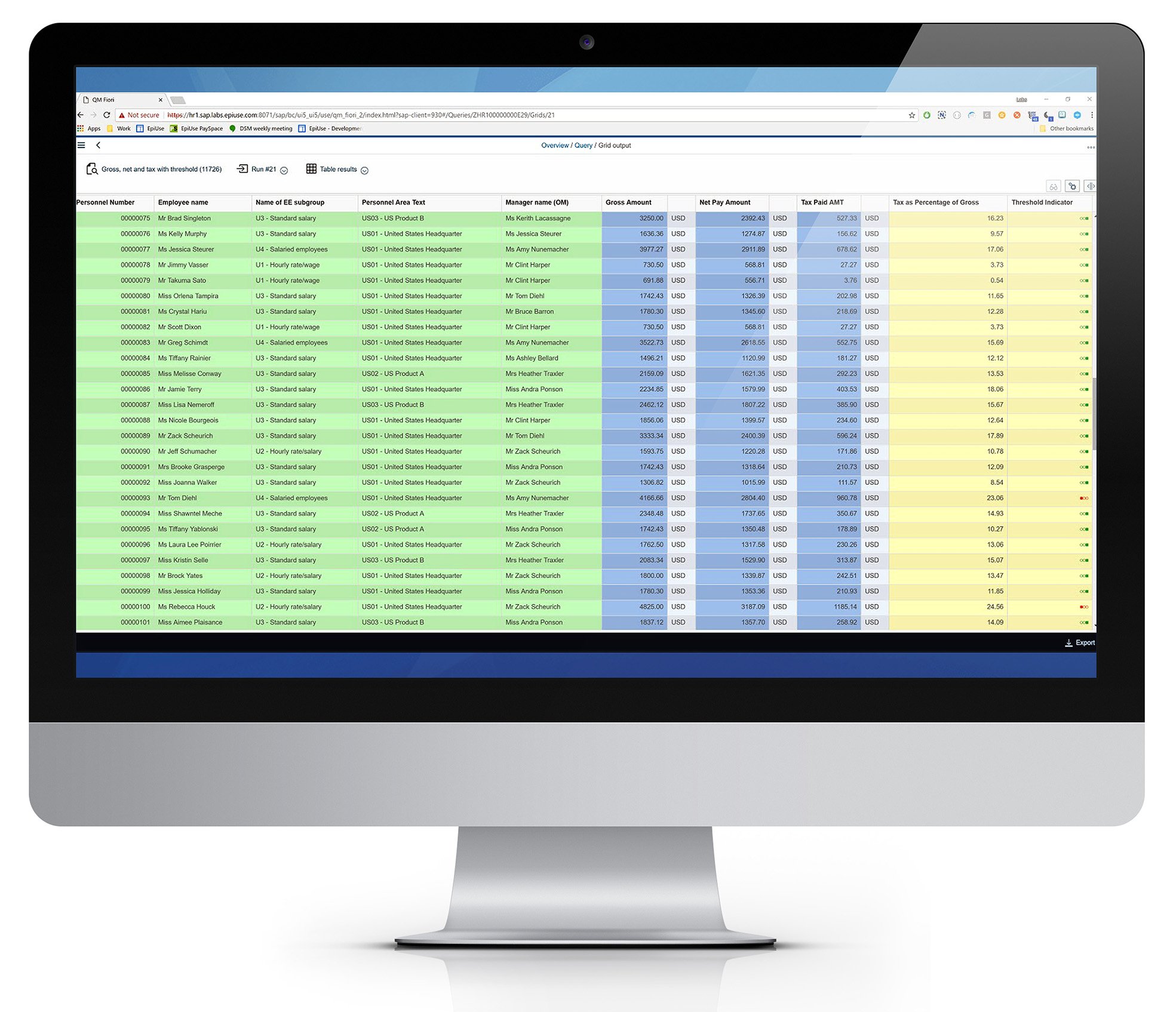
Employee Central Payroll Reporting

  • Validating that HCM and Payroll data is accurate as part of an upgrade project
    Use of Query Manager to extract data from SAP HCM and its related configuration tables to assist customers in moving their data from on-premise to SuccessFactors.
  • You can use the Query Manager SuccessFactors Integration Add-On to help with data replication challenges
    In the SAP SuccessFactors space, customers are doing quite a bit of data replication. As clients make their journey from on-premise SAP to SAP SuccessFactors, a popular challenge clients face is that they do not have a level of confidence that the data replication is working as it should, and they want the ability to audit that the data is consistent between the systems. The Query Manager SuccessFactors Integration Add-On compares the data between the two, and highlights any identified differences. You can then quickly identify any discrepancies in the data and take action accordingly. You can even schedule the report to show only a list of discrepancies for action, which can be automatically emailed to others.
  • Consolidated Headcount Reporting from SAP and SuccessFactors 
    Customers often have employees in various systems including multiple SAP systems, external SuccessFactors and other third-party systems. Customers want a consolidated headcount that includes the data from each of the disparate systems, and the Query Manager SuccessFactors Integration Add-On makes it easy to do this.
  • On-premise SAP HCM + SuccessFactors Recruitment data 
    A popular use of integrated reporting includes a report of employee core HR and Payroll data from on-premise in tandem with data from SuccessFactors Recruitment to identify things like cost for hire, determining correlations between master data and recruitment data (i.e. Millennials tend to apply via a mobile device and stay with the company on average of 2 years compared to Baby Boomers who enter through a third party referral and stay on average 7 years).
  • On-premise SAP HCM + SuccessFactors Employee Central data
    In today’s world it is imperative to ensure that an employer has a culture of diversity and inclusion.  For those customers who have SAP On-Premise Payroll and SAP SuccessFactors Employee Central, the data related to ethnicity, age, race, religion, gender, disabilities etc. can sometimes be in disparate systems. A solution like the Query Manager SuccessFactors Integration Add-On gives you the ability to access all of this data in a single report. Accessing this information could assist in doing an evaluation to ensure pay equity among different groups, male, female, young, old etc. It can be leveraged to answer questions such as “What is the ethnicity and gender profile of our Highly Compensated Employees (HCE)?” or “ What is the promotion history for men vs. women?”.

Access your Query Manager data from SuccessFactors
All data is accessible via web browsers, mobile devices, self-service portals, HR Renewal portals or even from within SAP SuccessFactors Employee Central.
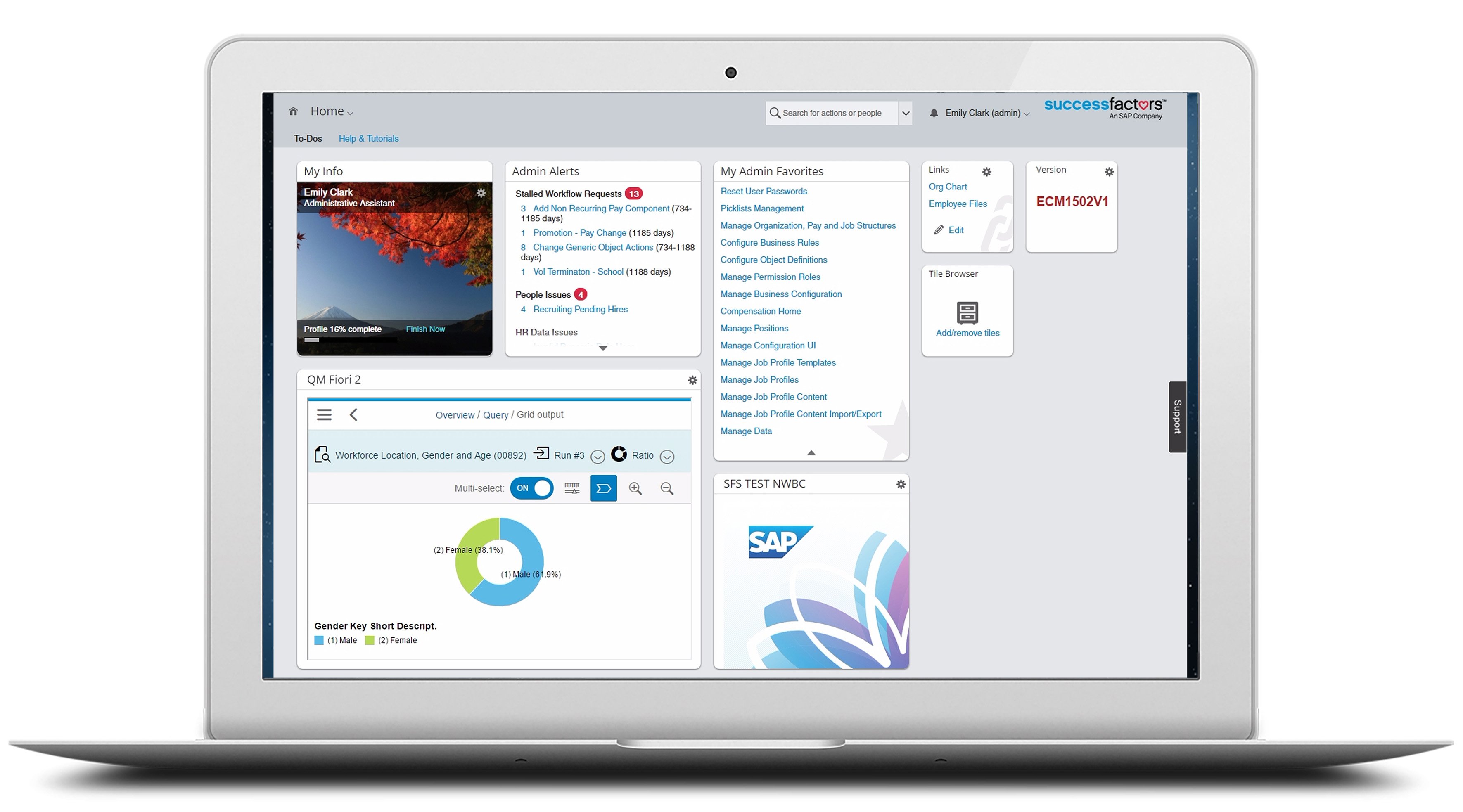
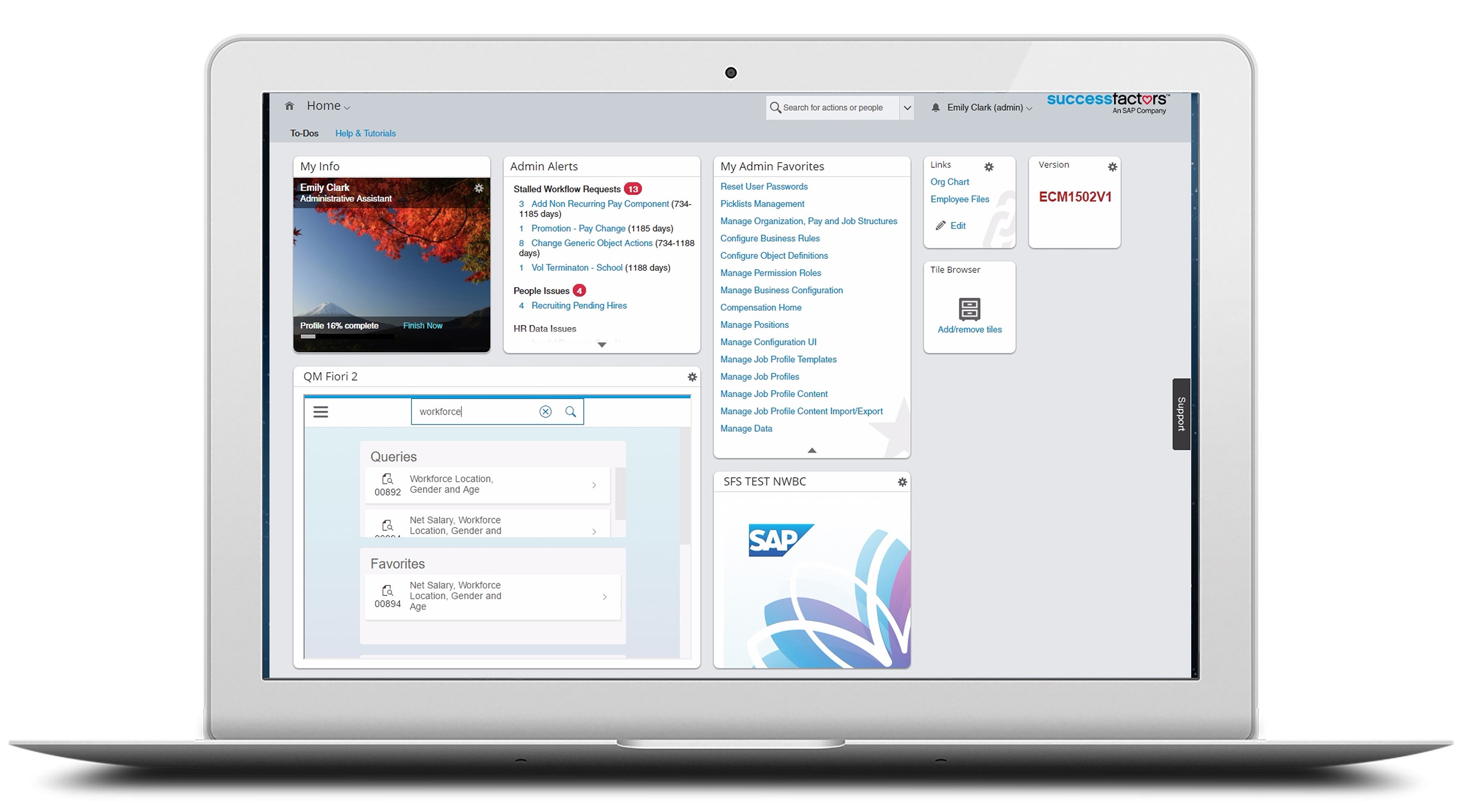
QM Intrgation in SFSF Landing Page

QM Intrgation in SFSF Landing Page

Query Manager is easy to use
Query Manager is designed to make it easy for an end-user to build their own reports. Users can simply select fields from the left side of the screen which includes fields from all areas within SAP HCM, Payroll, SuccessFactors, Configuration and virtually any other data source, and drag them on to the right hand side of the screen to build a report (see sample below). Users follows the roadmap at the top of the screen to easily create the reports they need, in minutes.
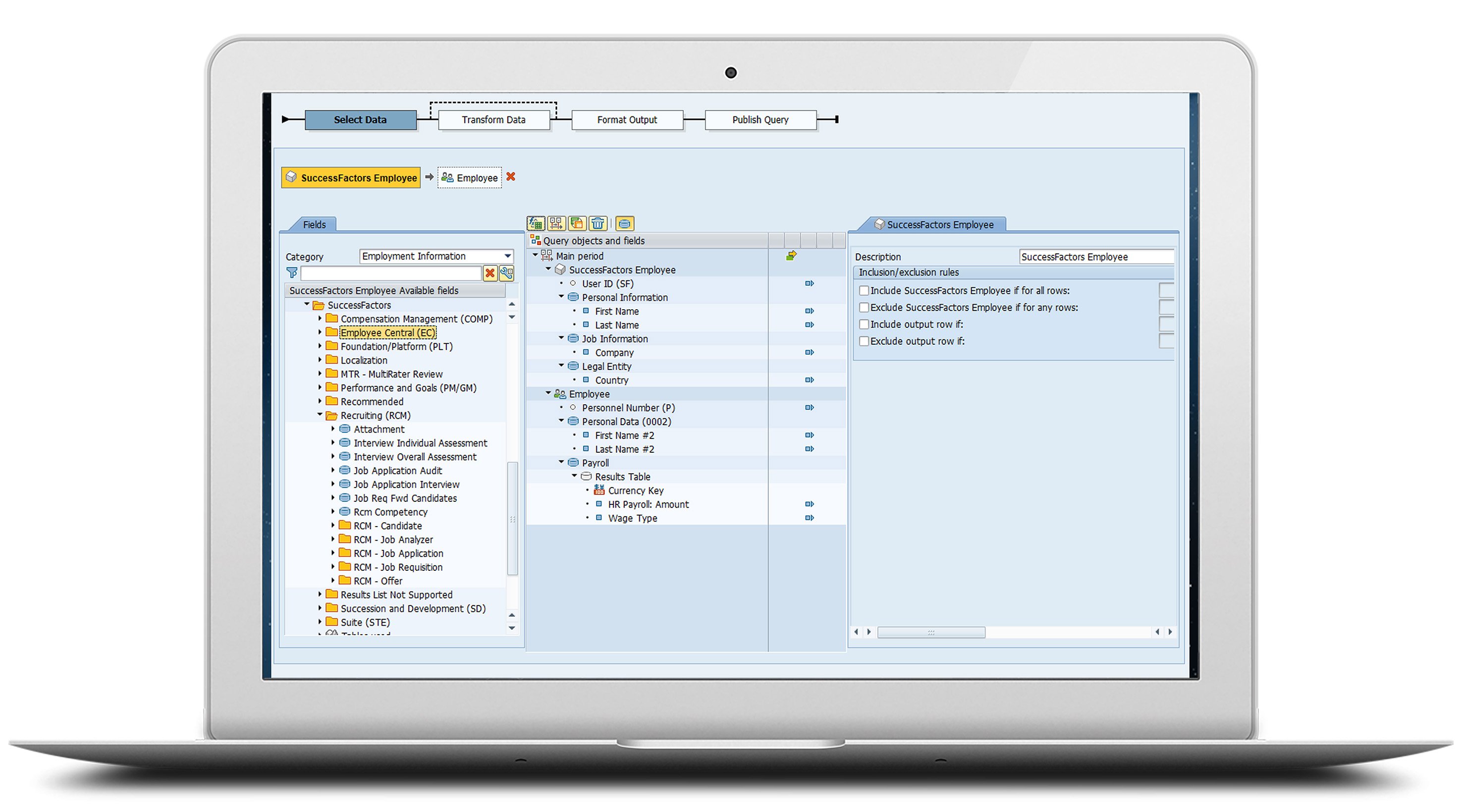
Query Manager Reporting

Query Manager is a SAP-certified Solution
Query Manager is a certified solution by SAP and it is also listed as an approved add-on available for SuccessFactors Employee Central Payroll (via SAP Note 2167337). It uses SAP’s recommended OAuth2 with certificate-based SAML authentication and adheres to role-based authorizations.

There are many reasons why a customer would require access to SuccessFactors data with their SAP HCM data.  The Query Manager SuccessFactors Integration Add-On makes it easy and secure. To learn more about Query Manager or the Query Manager SuccessFactors Integration Add-On, please feel free to reach out to us at info@labs.epiuse.com.

Danielle Larocca

With over 20 years in SAP Human Capital Management, Danielle is a recognized leader in HR technology. She holds the distinguished roles of SAP Mentor and SuccessFactors Confidant, and serves as HCM Chairperson for ASUG (America's SAP User Group). Danielle is a sought-after speaker at international conferences, sharing insights on HR tech trends. She has authored four best-selling books on SAP and holds certifications in both SAP and SuccessFactors technologies.

Prev Home Next Back to top

Tags:

Recommended: